
BY LETTER
Non-Luminary World Classification Scheme

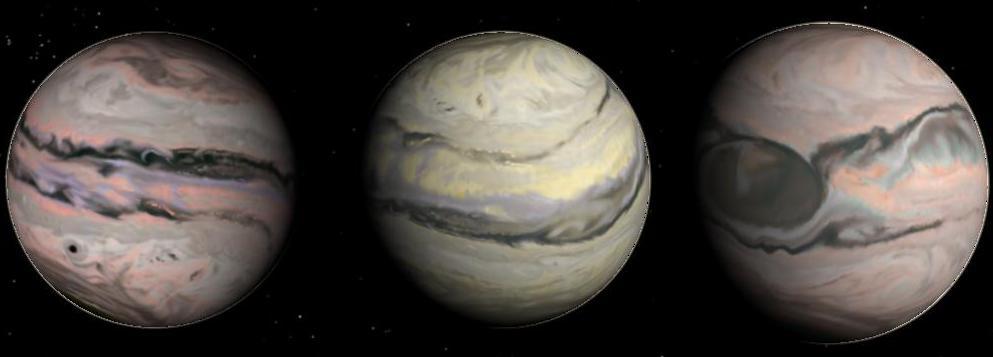 Image from Steve Bowers |
The Non-Luminary World Classification Scheme, or NoLWoCS, is a near standard classification method used to identify the many different forms of planetary bodies, minor worlds, and artificial structures that have evolved naturally or that have been created by the many societies and cultures of the Terragen Sphere. While every world or megastructure is, in its own way, unique, there are certain characteristics that can be used to identify and classify these places. The purpose of NoLWoCS is to provide an easy, "at a glance" platform for the common User, whereby he might find the navigation of the Sphere, virtual or real, a little easier.
- NoLWoCS is divided into three tiers of classification: Class, Type, and Subtype. The different Classes of worlds are dependent on size, overall characteristics, and status of a planet. For instance, Planetoidal and Terrestrial world Classes are divided according to size, just as Terrestrial and Jovian worlds are different Classes because of their general characteristics, and of course, artificial worlds are different from all of these because they are not naturally occurring.
- World Types are dependant on a variety of factors, but generally the compositional elements, which often lead to different planetary features and behaviors, are of sufficient difference to separate these worlds. Subtypes are much more specific, and often are the result of what would normally be considered minor planetary features. For instance, Gaian worlds are divided into several different Subtypes based on items such as the amount of surface water, atmospheric composition, and so on.
Table of Contents
1. Planetary Cloud/Haze Types and Temperature Regimes2. Asteroids
3. Minor Planets (Planetoids)
4. Terrestrial Worlds
5. Neptunian Worlds
6. Gas Giants
7. Artificial Worlds
Planetary Cloud/Haze Types and Temperature Regimes
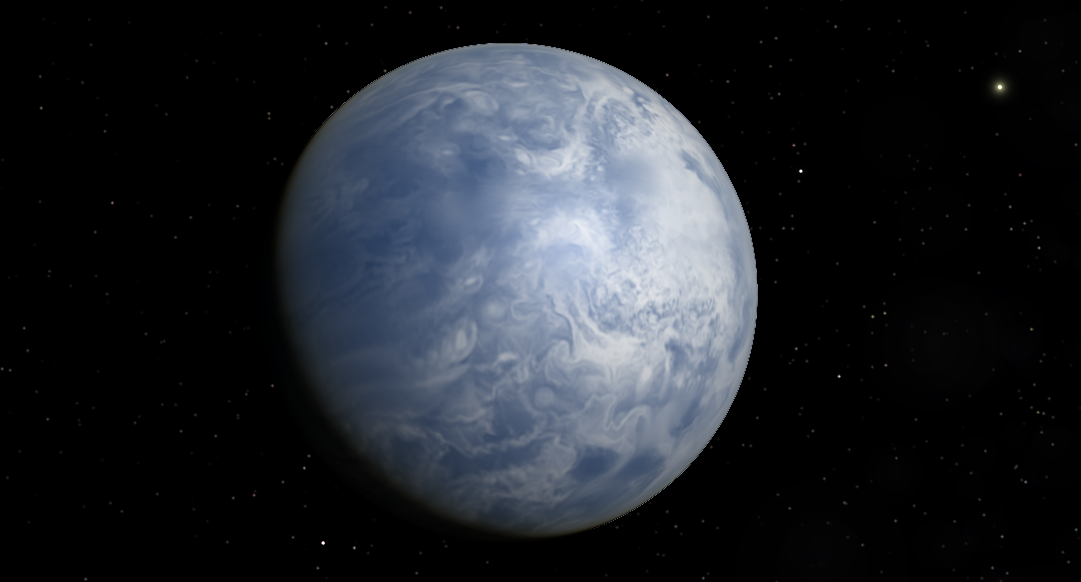 Image from Steve Bowers | |
| Blueglass - a tidally-locked entstatian gas giant,which is hot enough at the epistellar point to produce blue-gray silicate clouds | |
- Cryoazurian Type Clarified: Below 60 Kelvin, no visible clouds and only faint organic hazes. Dull blue in color.
- Methanean Type Clouds: Worlds between 55 and 105 Kelvin, hosting clouds of methane and ethane. Stratospheric cirrus clouds of argon and organic hazes are also commonly found on these worlds. Methanean clouds are usually white-turquoise in color.
- Tholian Type Haze: Hazy worlds between 60 and 400 Kelvin, sporting various types of organic hazes. These worlds are usually a pale yellow, orange, or brown.
- Ammonian Type Clouds: Worlds hosting ammonia and ammonium hydrosulfide clouds. They can be found at temperatures between 75 and 190 Kelvin. Ammonian clouds can be cream, beige, or peach in color. Organic compounds can result in an orange, brown, or gold tinge. Ammonia clouds form at colder temperatures than ammonium hydrosulfide, and dominate the appearance below around 100 Kelvin.
- Aquean Type Clouds: These temperate worlds between 175 and 360 Kelvin have clouds of water vapor. Aquean clouds are predominantly white, but can take on a slightly brown, blue, or grey color.
- Acidian Type Clouds: Warm worlds between 200 and 570 Kelvin that have high metallicities. Clouds are dominated by sulfuric acid, less commonly phosphoric acid or monoammonium phosphate. Water can also be present on acidian worlds, but is usually restricted to cirrus clouds due to the higher temperatures. Acidian clouds are usually tan, taupe, or beige in color.
- Mesoazurian Type Clarified: Worlds with no high altitude clouds and minimal organic and organosulfur hazes, between around 400 and 700 Kelvin. Dull blue to teal in color.
- Silicolean Type Haze: Worlds with hazes of silicone oils, fluorosilicones, and other organosilicon compounds, occurring between 550 and 1000 Kelvin. Light brown or grey in color.
- Chloroalkalinean Type Clouds: Worlds between 620 and 900 Kelvin with clouds of alkali metal chlorides. Potassium chloride is the most common of these, and may also be accompanied by other metal compounds with similar condensation curves such as zinc sulfide. These clouds can be bronze or pale green in color.
- Sulfoalkalinean Type Clouds: Worlds between 800 and 1100 Kelvin with alkali metal sulfide clouds. There is significant overlap between sulfoalkalinean and chloroalkalinean clouds, with sulfoalkalinean clouds being significantly hotter. The most common compounds in these clouds are sodium sulfide, lithium sulfide, and lithium fluoride. These clouds are dark brown or grey in color.
- Pyroazurian Type Clarified: Worlds between around 1100 and 1400 Kelvin with no visible clouds or hazes. Can be dull to deep blue depending on the level of impurities.
- Erythronian Type Clouds: Worlds between 1150 and 1500 Kelvin, possessing clouds of Manganese oxides and sulfides, as well as metallic chromium. Some erythronian worlds are hot enough to host titanium and vanadium oxide hazes instead of organosulfur compounds. Clouds of this type appear dull red to dark orange in color.
- Enstatian Type Clouds: Worlds with clouds composed of rocky and metallic compounds, usually iron and magnesium silicates. These worlds occur at temperatures between 1200 and 1900 Kelvin, and are predominantly grey with a green, blue, or brown tinge.
- Rutilian Type Haze: Hazes of titanium and vanadium oxides occurring between about 1450 and 2000 Kelvin. These worlds are dark grey to black in color.
- Refractian Type Clouds: These clouds occur between 1700 and 2350 Kelvin. They are comprised of various refractory oxides, such as calcium titanate, calcium aluminate, corundum, as well as vanadium and titanium oxides. These clouds are usually pale red, orange, brown, or pink.
Asteroids
Asteroids |
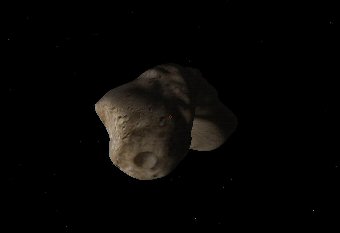 Image from John Dollan |
ASTEROID CLASS: non-spherical worlds of extremely low mass
The Asteroidal Class is the most basic, and the most numerous, of all the classes in the NoLWoCS. There are, of course, even more numerous smaller objects, namely meteoroids and space dust, and these are the ultimate building blocks of any solar system. But only asteroids can be considered worlds in their own right. By NoLWoCS definition, these are worlds from 50 meters to 50 kilometers in diameter. .Types of Asteroid
- Carbonic: Almost exclusively of carbon compound construction, resulting in the formation of bodies from pockets of high carbon material around later generation stars choked with heavier elements; common near the galactic core. They may also form in systems where two white dwarfs have spiralled together, and the resulting circumstellar disk coalesces into bodies high in carbon.
- Metallic: Metallic, more formally referred to as Sideritic, asteroids are composed of almost pure nickel iron, and represent a sizeable proportion of all asteroids in most star systems. They are moderately bright and fairly dense. It is believed that these asteroids originated from larger parent bodies that had developed sufficiently to become differentiated; that is, they had begun to form a crust, mantle, and core. Almost certainly these bodies were then destroyed by collisional processes with other bodies in the very early stages of planetary formation, when a typical inner system region might contain hundreds of planetesimal bodies. The result would be, of course, the smaller and often irregularly shaped metallic Sideritic asteroids. Many Siderites have eccentric orbits, reflecting the volatile birth that they experienced. However, many are also found in confined belt orbits. Those in belt orbits are prone to further impacts with other belt objects, and as such represent the source of most iron meteorites. Sideritic asteroids, classically called M-type asteroids, are probably the richest and most sought after of bodies when it comes to minerals.
- Carbonaceous: Stony carbon-rich and volatile-rich meteorite or asteroid, some of the earliest-formed matter in a solar system. Rich in carbon, these bodies are largely pristine and unchanged objects, relics from the formation of their solar system. Due to a large proportion of organic compounds, they are fairly reddish in coloration, and may contain sizable reservoirs of volatiles such as water ice. They are typically found in the outer most regions of their inner system region, although gravitational scattering over time can of course produce some highly eccentric orbits.
- Silicaceous: Silicaceous Asteroids have high albedoes (from 15% to 25%) are slightly red in colour and contain moderate amounts of metallic elements. Silicaceous asteroids are mainly metallic iron and magnesium-silicates in composition. Many times these are fragments from larger bodies, even to the point of being little more than piles of "rubble", loose aggregates of material that have been drawn back together by gravity after the initial object was broken up. As a solar system forms, a population of asteroids might form close enough to the young and active sun so that they become differentiated bodies. These Silicaceous asteroids are heated sufficiently by the electromagnetic currents so that minerals will become separated, much like the process experienced by larger worlds due to their internal heating. As the sun begins to stabilize and cool down, what is left is a rocky body that typically has an olivine crust surrounding a nickel-iron alloy core; a fully differentiated asteroid may become a member of the Vesta- or V-subtype.
- Hydronic: Located close to the system's snow-line, these are silicaceous bodies with high instances of subsurface volatiles, typically in the form of water ice. Polar deposits in permanently shadowed regions may also be present.
- Gelidic: Located beyond the snow line of their system, these are bodies with high instances of ice (ranging from water to methane to carbon dioxide) and many other compounds, surrounding a core of silicate rock. The smaller bodies may be a nearly homogeneous mixture of ice and rock, due to the lack of a mass great enough to have caused layer differentiation early in the formative period. See also Centaurian Type
- Vulcanian asteroids are asteroids that are very close to the local star; in the Old Solar System, Vulcanian asteroids are those which orbit cclser than the planet Mercury to the Sun. In other systems Vulcanian asteroids are defined as those which have an average temperature higher than 400 Celsius.
- Oortean: Cometary bodies which can be found throughout the solar system. They may also be constituent members of outer planet ring systems, or they may be outer planet moons. Although classically known as comets, these small worlds are classified as Oortean bodies. The name is derived from the Oort Cloud, the reservoir that could be viewed as the last remnants of the planetary accretion disk, from which all other bodies in a solar system form. All comets originate from this region, although their final orbits are often shaped by planetary encounters as they pass through their solar system. The gravity of passing stars can have a marked effect on comets in the Oort Cloud, and even a seemingly small nudge is enough to send them on a course towards their parent star. Their initial orbits are long and drawn out, and simply to reach the inner regions of a solar system can take hundreds of thousands of years. But once they do begin to pass through the more populated regions, planetary gravity can effect their orbits just as easily. Some comets will eventually find themselves in fairly stable long term orbits of hundreds of years, while others can be trapped in an orbit that is only a few years in length. Many other comets pass through their solar system only once, moving on a sun-grazing path that will eventually shoot them out of the solar system all together. And still others will even impact their sun.
- Vulcanian: One of the several dynamically stable orbital zones in most solar systems is that which lies quite close to the parent sun. These epistellar regions often contain a planet of some form, but those that do not almost always have a population of a few hundred asteroidal bodies five kilometers or less in diameter. These bodies are largely unchanged since the formation of the solar system, but because of the intense thermal conditions present they tend to be dense and metallic in nature, and many possess quite unique mineral assemblages not seen on other solar system bodies. As a consequence of their placement, Vulcanians do not present an impact hazard to Gaian worlds, although they do threaten Vesperian Type planets. Indeed, only the inner planets are threatened by these vast rocks, and that typically ranges out to approximately 3.5 AU. In many systems, however, this population may have long since been gravitationally scattered by still forming planets that migrated inward and eventually were consumed by the sun.
Minor Planets (Planetoids)
Minor Planets (Planetoids) |
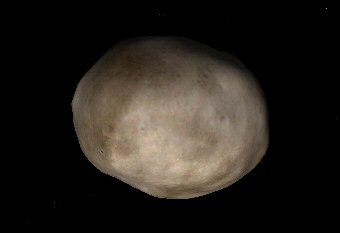 Image from John M. Dollan |
PLANETOID CLASS: worlds with enough mass to pull themselves into spherical or near-spherical shapes
Generally, rocky (more rarely metallic or icy) bodies, either irregular or regular in shape, large asteroid, moons, dwarf planets and deep space object. These objects are generally about 51 to 1,000 km along the longest axis. The upper limit for the mass of a planetoid is 0.05 x Earth's mass. More information here.Types of Planetoid
- Carbonean type: Carbon worlds of this mass have a chance to form around stars whose proto-stellar disks have developed carbon pockets within them, but they are far more common about late generation, high metal stars or even as the results of secondary planetary formation around high carbon stars such as white dwarfs. However, worlds of this size and mass also experience some differentiation during their formation. The cores of such worlds are dense masses of condensed graphite, though the planetoids at the higher mass range could form cores of partially crystallized diamond.
- Hadean Type: More Information here.
- Hygiean: These bodies are typically quite dark, with albedos ranging from 0.03 to 0.1. While there can be deposits of water ice or other volatiles beneath the surfaces of these planetoids, the surfaces are more often marked by craters and large boulders. These worlds are less dense and more easily disrupted by major impacts. The larger bodies, however, will have been differentiated through the formation process, and can have small cores of iron, with a dense mantle or rock and a crust of lighter silicates. The smaller worlds, though, may be a relative even mixture of sparse metals and the far more common silicate rock.
- Cerean Type: More Information here.
- Chronian type: Named after the plethora of such bodies orbiting the planet Saturn, these can be a highly varied lot. Typically, these worlds are small and heavily cratered bodies untouched by time, save for the numerous impacts that they have suffered. Their low mass and composition of primarily ice, with small rocky cores, are simply too small for sustained geological activity. As such, there is an absence of atmosphere, or related surface features. However, certain disruptions, such as through tidal flexing or other massive external forces may initiate geological forces that can completely resurface a planetoid, as well as form a minor atmosphere. If such active worlds are positioned properly in a gas giant system, an impressive ring system may even be formed.
- Vestian Type: More Information here.
- Kuiperian Type: More Information here.
Terrestrial Worlds
Terrestrial worlds |
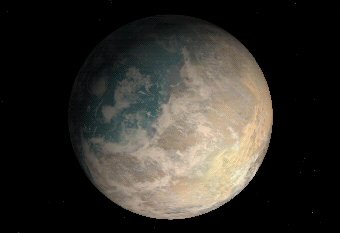 Image from John M Dollan |
TERRESTRIAL CLASS: worlds with an active internal geology that lasts one million years or more: 0.05 to 2.5 x Earth's mass
- Adamaean: Carbon Worlds. Carbon-rich terrestrials. More information here
- Ferrinian: Iron-rich, dense worlds. More information here
- Hermian: Dense, inner system worlds. More information here
- Selenian: Worlds with little or no metallic core.More information here
- Cytherean: Hot, greenhouse worlds. More information here.
- PelaCytherean: Terrestrial sized hot ocean worlds with thick atmospheres. More information here.
- LithicGelidian: Worlds with a mixed rock and ice composition. More information here.
- Europan: Icy worlds with a subcrustal ocean. More information here.
- Titanian: Icy worlds with thick atmospheres. More information here.
- Ymirian: Worlds made almost entirely of ices. More information here.
- Vesperian: Tidally locked terrestrial worlds. More information here.
- Hephaestian: These are the most active of planets, with surfaces that are almost entirely molten and a geology that changes on a yearly basis. The atmospheres of these planets vary greatly according to the world's size and mass, from having thick, Cytherean-like atmospheres to almost non-existent ones, where the feeble gravity loses any elements almost as soon as they are released from the surface. These worlds are generally heated by tidal flexing, by proximity to a star or as a moon of a gas giant. Example: Io.
- Amunian Type: Cold, dry worlds with high levels of ammonia in the atmosphere but little water. May develop an ammonia-based biosphere (see the Soft Ones xenosophonts for one example).
- Vitriolic Type: Worlds with lakes, seas or oceans of sulphuric acid; often with life, More information here.
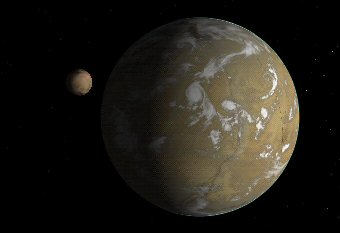 Image from John M Dollan |
Mars-like Worlds
- Arean type: Mars-like worlds where the atmosphere and hydrosphere has largely disappeared due to the cessation of magnetic activity. .More information here.
- EoArean subtype Young Mars-like Type planet with substantial atmosphere and surface water. More information here
- AreanLacustric subtype: Young Mars-like worlds with moderate amounts of ocean cover . More information here.
- AreanXeric subtype Mature, unusually hot and dry Arean type worlds. More information here.
- AreanTundral subtype Cold Arean type worlds, often with considerable reserves of ice More information here.
- EuArean Subtype Typical mature Mars-like world with minimal atmosphere and hydrosphere More information here.
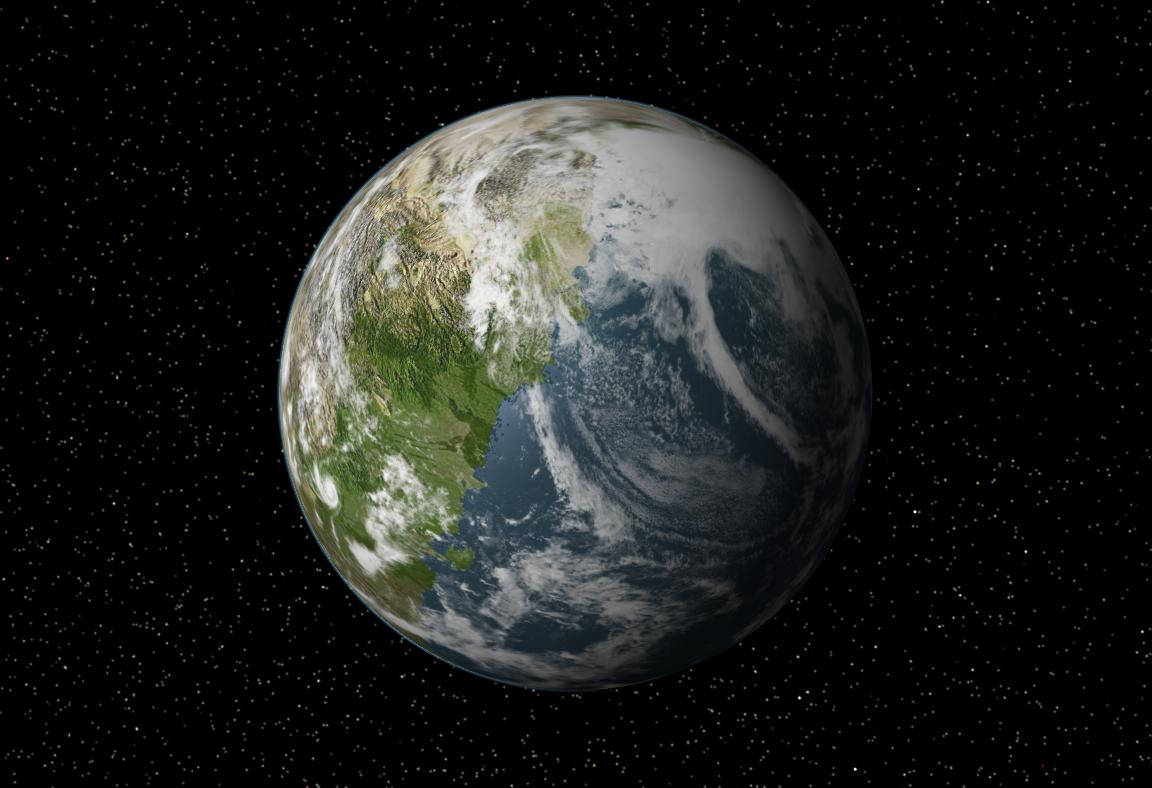 Image from Steve Bowers |
Earth-like Worlds
- Gaian Type: Any Earth-like terrestrial world, of which there are many diverse forms depending on water content, composition and temperature. More information here
- EoGaian Subtype: Young terrestrial worlds; these may develop into Gaian, Cytherean or Arean worlds later More information here
- MesoGaian Subtype: Earth-like worlds with primitive biospheres More information here
- Eugaian Subtype A mature Gaian world with life, also known as a Garden World More Information Here
- GaianTundral Subtype: Cold Gaian worlds with periodic, or persistent, ice ages More Information Here
- Campian Subtype: Dry Gaian worlds with 25% to 50% ocean cover More Information Here
- Paludial Subtype: Humid Gaian worlds with 25% to 50% ocean cover More Information Here
- Lacustric Subtype:Humid Gaian worlds with low topography and 50-80% ocean coverage; some of these worlds have extensive rainforest-type biomes More Information Here.
- Chlorogaian (Halogenic) type: Gaian worlds with high levels of atmospheric chlorine. More: Chlorine Worlds.
- To'ul'hese Worlds: These worlds are essentially Gaian versions of the Cytherean worlds. Thick and dense atmospheres, as well as a large amount of water, create high surface pressures and high temperatures. Life arises and adapts to these conditions, and can become quite diverse indeed. In one known instance, it has lead to an independent form of sapient life. More: To'ul'hian Worlds.
- Pelagic Subtype Gaian worlds where oceans cover the surface anywhere from 80 to 100%. More Information here
- EuPelagic Subtype Gaian worlds where shallow oceans cover the surface anywhere from 80 to 100%. More information here
- BathyPelagic Subtype: Gaian worlds where deep oceans cover the surface anywhere from 80 to 100%. More information here.
- PelaGelidic Subtype, ice covered ocean worlds More information here.
- TundralPelagic subtype, partially ice covered ocean worlds More information here.
- Xeric subtype Dry worlds with less than 25% ocean cover More information here.
- HyperXeric subtype Very dry worlds with less than 10% ocean cover More information here.
- PostGaian subtype: Old Gaian Worlds that are losing their biosphere and hydrosphere More information here.
Superterrestrials |
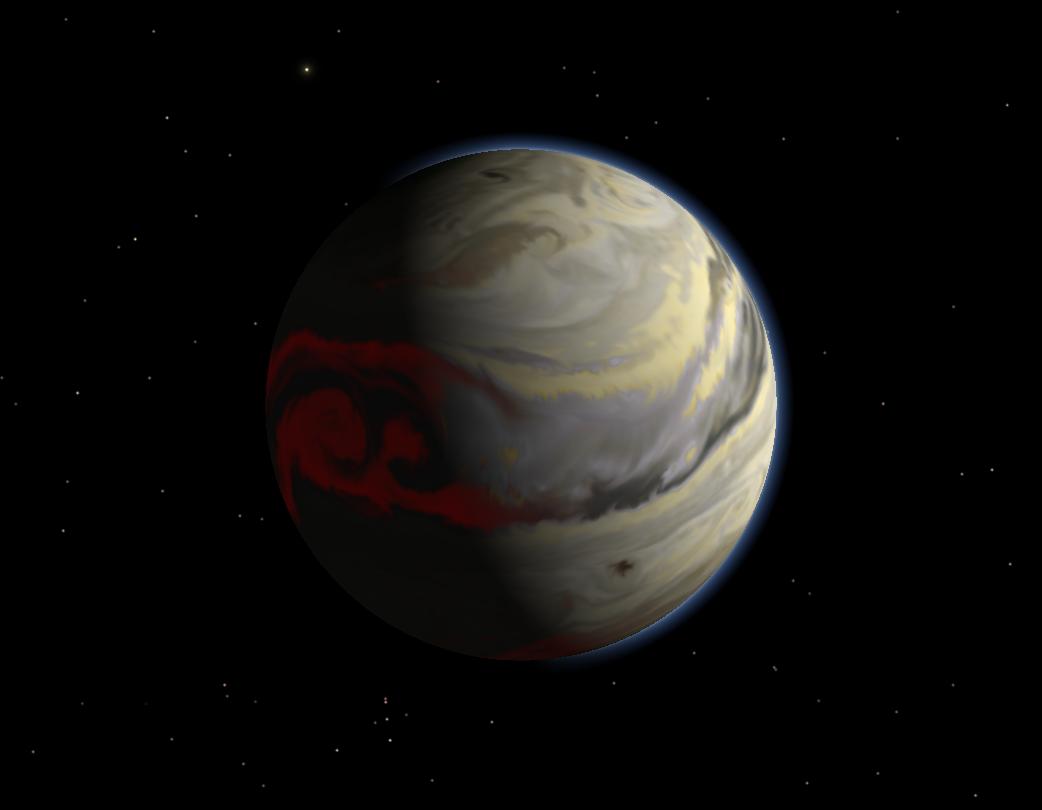 Image from Steve Bowers |
SUPER-TERRESTRIAL CLASS: worlds that are moderately massive, intermediate in mass between Terrestrial worlds and Neptunian worlds
More details here.This class of worlds is both numerous and varied; most types of terrestrial worlds also exist as superterrestial types, but with higher gravity and greater mass which can profoundly affect the conditions on the surface.
Among the most common types of superterrestrial are SuperHermian, SuperCytherian and SuperGaian types, as well as the more unusual types listed below.
- Pyrothalassic Type: Hot superterrestrials More information here
- Pyrohydrothalassic Type - Hot waterworlds More information here
- Panthalassic Type: Giant Waterworlds More information here
- Nebulous Type: Superterrestrials with thick, helium-rich atmospheres. Helium worlds of this kind (generally known as Helian Worlds) often have superrotating atmospheres; those which are tidally locked often have wildly assymetric weather patterns.
- Gas Dwarfs: worlds smaller than 0.03 x the mass of Jupiter which nevertheless have thick atmospheres consisting mostly of hydrogen and helium.
- Other types of superterrestrial planets include certain hyperbarian and chthonian worlds, some of which have very sparse atmospheres indeed.
Neptunian Worlds
Neptunian Worlds | |
 Image from Steve Bowers | |
| An AzuriNeptunian world | |
Gas Giants
Gas Giants |
 Image from John M Dollan |
Gas Giants (also known collectively as Jovian worlds) mostly consist of hydrogen and helium, and (unlike ice giants) have less than 50% water content. Gas giants form beyond the snow line in a protoplanetary cloud, where volatile elements are abundant. Some rare, and very ancient gas giants formed around the first generation of very low metallicity stars and have almost no rocky or metallic component. Gas giants are classified in two ways - by temperature, which affects the composition of the cloud layers of the giant in a number of significant ways, and by mass. Examples of each of the temperature classes can be found in any of the size classes, and vice versa, although some size classes are more common at certain temperatures and vice versa.
A typical gas giant may be classified using both size and temperature types to create a subtype, so the full classification might be Meso-EuJovian Subtype(This is the full classification for Jupiter) or Super-HyperthermalJovian Subtype (the full classification for Behemoth, Hat-P-1B).
Gas Giant Classes
Jovian Class: 0.03 to 13.0 Jupiter masses, with less than 50% water- Microjovian Type Jovian worlds with masses from 0.03 to 0.21 that of Jupiter, but less than 50% water More Information here.
- Mesojovian Type Jovian worlds with masses from 0.21 to 8.0 that of Jupiter More information here.
- SuperJovian Type Jovian worlds with masses from 8.1 to 13.0 that of Jupiter, the theoretical upper limit of planets. Objects more massive than this are classed as Brown Dwarfs. More information here.
- See also Gas Dwarfs.
Gas Giant Temperature Types
Gas Giants are classified into several temperature subtypes, as shown earlier in this article. These subtypes are grouped together into a smaller number of temperature types, which correspond to the Sudarsky gas giant taxonomy used in a number of venerable classification systems.- HyperthermalJovian Type: Very hot gas giants, with temperatures above 1400 Kelvin. Includes so=called 'Puffy worlds' and 'Comet worlds'. More Information here.
- EpiStellar Jovian Type: Hot, dark gas giants with temperatures between 900 Kelvin and 1400 Kelvin. More information here
- AzuriJovian Type Warm clarified blue gas giants with temperatures between 350K and 800K. More information here.
- HydroJovian Type: Temperate gas giants with clouds predominantly consisting of water vapour. More information here.
- EuJovian Type: Cool gas giants, with clouds predominantly consisting of ammonia. More information here.
- CryoJovian Type: Cold gas giants in the outer reaches of a planetary system, generally too cold for clouds to form at all. More information here.
Other World Classes
- HyperBarian Class: Very dense planets with cores up to 100 x Earth's mass. More information here.
- Chthonian Class: Gas giant worlds, formerly HyperthermalJovians, which have lost their volatiles through evaporation. More information here.
- Stevensonian Class Planetary mass objects which are found in interstellar space. More information here.
World types distinguished by their orbital and rotational parameters
Eccentric worlds and Tilted Worlds
Worlds of any class that have unusually high tilts or unusual orbits are classed as Skolian, Janusian or Ikarian worlds.- Skolian Type Worlds Worlds with axial tilts greater than 45 degrees; any class of world can have Skolian characteristics. More information here
- Janusian Type Worlds Worlds in resonant orbits which regularly exchange momentum. More Information here
- Ikarian type worlds Worlds with eccentric orbits, with an eccentricity greater than 0.35. Any class of world can have an Ikarian type orbit. More Information here.
Artificial Worlds
The artificial worlds found within the Terragen Sphere have almost all been constructed by humans and their mind-children; some, such as the Black Acropolis, are much older. Artificial worlds fall into two broad categories- those that rotate to produce artificial gravity, and those that do not.- Rotating Space Habitats Habitats constructed using conventional materials - includes Paired Habitats, Stanford Tori, O'Neill Cylinders, Bernal Spheres, Bishop Rings. More information Here.
- Banks Orbitals and Ringworlds - Rotating habitats made from exotic materials (see Banks Orbitals).
- Non Rotating Space Habitats - often used by space adapted clades; can be very large, but they are limited by their density- if they are too dense they will undergo self-gravitational collapse. More information here.
- Ederworlds More information here.
- Supermundane Worlds -worlds dynamically suspended above planets and stars. More information here
- Freespheres - microgravity balloons containing atmosphere -can be very large indeed. More information here.
- Dyson Swarms and Spheres Many variants of this type of construct are described here.
Related Articles
Appears in Topics
Development Notes
Text by John M. Dollan, with additions by Steve Bowers
Initially published on 23 November 2004.
An interesting alternative system proposed by Stephen Ashworth of the British Interplanetary Society; A Binary Mass-Orbit Nomenclature for Planetary Bodies updated November 2008
Initially published on 23 November 2004.
An interesting alternative system proposed by Stephen Ashworth of the British Interplanetary Society; A Binary Mass-Orbit Nomenclature for Planetary Bodies updated November 2008
Additional Information
An interesting alternative system proposed by Stephen Ashworth of the British Interplanetary Society; A Binary Mass-Orbit Nomenclature for Planetary Bodies






